
Understanding the Riemann Hypothesis
A Deep Mystery at the Core of Number Theory

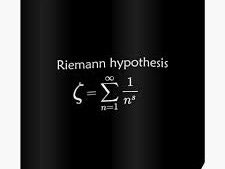
The Riemann Hypothesis is one of the most tantalizing open problems in mathematics, sitting at the intersection of number theory and complex analysis. First conjectured by Bernhard Riemann in 1859, this hypothesis delves into the distribution of prime numbers and proposes a precise structure underlying their seemingly chaotic pattern.
At its core, the Riemann Hypothesis asks:
“Do all non-trivial zeros of the Riemann zeta function lie on the critical line (1.0) in the complex plane?”
\( \text{Re}(s) = \frac{1}{2} (1.0)\)
This question has profound implications for mathematics, touching fields as diverse as cryptography, quantum mechanics, and numerical computation. Solving the Riemann Hypothesis would not only unlock new understanding of prime numbers but also cement a unifying principle in pure and applied mathematics.
Semantic Session: Key Terms and Concepts
Before delving into the hypothesis itself, it’s essential to define the key concepts that form the backbone of this discussion.
1. Prime Numbers
Definition: Primes are natural numbers greater than 1 that are divisible only by 1 and themselves. For example, 2, 3, 5, and 7 are primes.
Key Idea: Primes are often considered the "building blocks" of the integers, as any integer can be factored uniquely into primes.
2. The Riemann Zeta Function
Definition: The Riemann zeta function is a complex function defined as:
This holds for:
Key Idea: This function encodes deep information about the distribution of prime numbers.
3. Non-Trivial Zeros
Definition: Zeros of zeta that lie in the critical strip 0 < R < 1. These are distinct from the "trivial zeros," which occur at negative even integers such as = -2, -4, -6.
Key Idea: The Riemann Hypothesis concerns these non-trivial zeros, conjecturing that they all lie on the "critical line":
4. Critical Line
Definition: The line in the complex plane defined by
Key Idea: If the Riemann Hypothesis is true, all non-trivial zeros of the zeta function are located on this line. With zeta being represented by:
5. Prime Number Theorem
Definition: A theorem describing the asymptotic distribution of prime numbers, stating that the number of primes less than x is approximately
Key Idea: The Riemann Hypothesis would refine our understanding of the error term in this approximation.
The Riemann Hypothesis: The Problem Statement
1. What Is the Hypothesis?
The Riemann Hypothesis conjectures that all non-trivial zeros of the Riemann zeta function have a real part exactly equal to one half.
2. Why Does This Matter?
The distribution of prime numbers appears erratic, but it is deeply connected to the zeros of the zeta function. If the Riemann Hypothesis is true, it implies that the primes have a well-defined order and that their distribution follows a precise mathematical law.
Implications of the Riemann Hypothesis
1. Refining the Prime Number Theorem
The Riemann Hypothesis provides a sharper estimate of the error term in the Prime Number Theorem. It predicts that the fluctuation in the number of primes up to x is smaller than previously known bounds.
2. Cryptography and Security
Modern cryptographic systems, such as RSA, rely on the properties of prime numbers. Proving the Riemann Hypothesis could influence these systems, though the extent of the impact remains speculative.
3. Connections to Physics
The zeros of the zeta function show patterns resembling the energy levels of quantum systems. This surprising connection links the hypothesis to areas like quantum chaos and random matrix theory.
Responses to the Riemann Hypothesis
Despite decades of effort, the Riemann Hypothesis remains unsolved. Here are some prominent approaches and partial results:
1. Verifications of Zeros
Millions of zeros have been numerically verified to lie on the critical line, but this does not constitute proof for all zeros.
2. Analogues in Finite Fields
Mathematicians have proven similar conjectures for zeta functions defined over finite fields, offering insights but not a direct proof for the original hypothesis.
3. Generalized Riemann Hypothesis (GRH)
An extension of the hypothesis to other zeta-like functions, the GRH has implications for fields beyond number theory, including graph theory and computational complexity.
Broader Significance of the Riemann Hypothesis
1. The Clay Millennium Prize
The Riemann Hypothesis is one of the seven Millennium Prize Problems, for which the Clay Mathematics Institute offers a $1 million reward for a correct solution.
2. A Unifying Principle
The Riemann Hypothesis represents a bridge between number theory, analysis, and algebra. Its resolution would likely lead to breakthroughs in multiple areas of mathematics.
3. Practical Applications
Although theoretical, solving the hypothesis could refine algorithms for prime testing, cryptographic protocols, and numerical simulations.
Conclusion
The Riemann Hypothesis stands as a pillar of unsolved mathematical mysteries, uniting deep theoretical questions with practical applications. Its resolution would mark a monumental achievement, reshaping our understanding of prime numbers and their place in the mathematical universe.
In this series, we will continue exploring the other Millennium Prize Problems, each of which poses challenges of similar depth and importance. Stay tuned as we unravel the next enigma!
PS: Ive only started using latex and learning about the riemann hypothesis very recently. If you have any suggestions on how to improve or errors made, please let me know.